Tracking Policy Forces that Drive Technology, Capital Formation & Growth

HOME

BRINGING EDUCATION TO CHINA: TARA'S KIDS
CHINESE ACADEMY OF SCIENCES COURSE MATERIALS

HOME

HOW WE THINK

STORM WATCH

JOHN'S BOOKSHELF

MEDIA CLIPS

JOHN'S BIO

SPEECHES

EVENTS

LINKS & TOOLS

ARCHIVES

PRIVATE EQUITY

CONTACT US

WHAT'S NEW

Take the Media Survey

Watch for John:

Forbes on Fox
Saturday mornings

Kudlow
CNBC Kudlow & Company

----------------------------------
> Nation on the Decline Op-Ed

>NMRC Conference on Telecom

> The Real Reaganomics

Chinese Venture Capital Magazine

Zhong Guan Cun magazine from Haidian district in Beijing where John is the Chief Consultant for Finance. Haidian district is the "Silicon Valley" of Beijing and is also home to China Central TV Station (CCTV), Beijing Library and 68 universities, including China's best: University of Beijing and Tsinghua University. Haidian has more than 375,000 are scientific research personnel, and 356 academicians. Haidian also has a total of 138 scientific research institutions.
FORCES AT WORK

Policy Carried Interest Tax Study, Phase II
I've finished the second of two Phases of a study for the Chamber of Commerce concerning recent proposals to increase tax rates on carried interest. This is a big deal that could affect billions of people across the U.S. from Wall Street to Main Street. You can read the introduction below, or read the executive summary or the full version as PDF files at the Chamber of Commerce website. You can also read Part I of the study here.

Analysis of the Impact of Increasing Carried Interest Tax Rates on the U.S. Economy:
Part II

Introduction

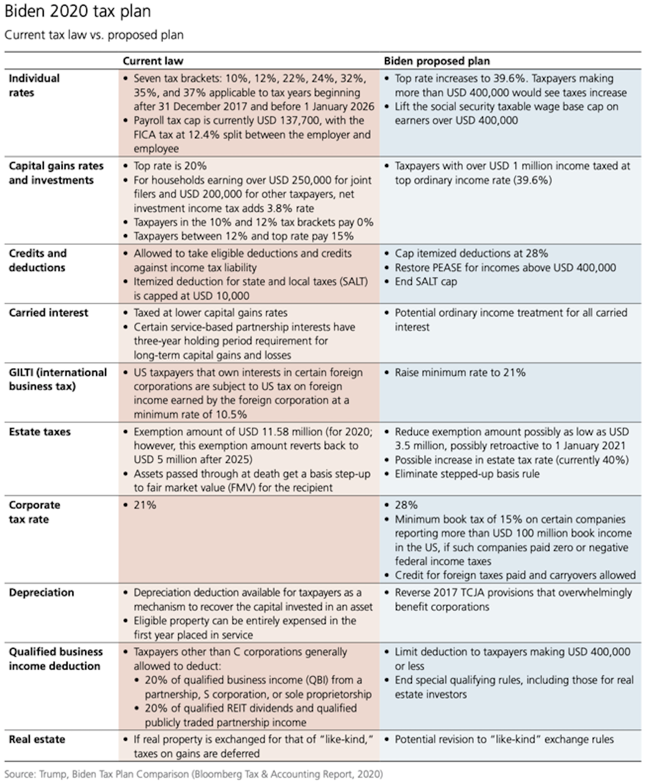
In today’s polarized political climate leading up to the 2008 elections, a number of presidential candidates and members of Congress have singled out private equity sponsors, venture capital funds, hedge funds, and other businesses organized using limited partnership structures for punitive attention. They are proposing more than a doubling of income tax rates on the general partner’s contractual share of profits, known as “carried interest,” from long-term capital gains rates to ordinary income levels. On October 25, Chairman Charles Rangel of the House Committee on Ways and Means proposed a tax bill that the New York Times described as “a massive overhaul of the American tax system with serious implications for the private equity and hedge funds industries.”

Then, on November 1, 2007, the House Ways and Means Committee passed H.R. 3996, an $81 billion tax package billed as the “Temporary Tax Relief Act of 2007,” on a 22-13 party-line vote. This bill contained a provision to tax all general partner income, including the long-term capital gains component, as ordinary income—which, according to their calculations, would raise $25.6 billion in tax revenues over ten years. Treasury Secretary Henry M. Paulson Jr. has said that the White House opposes the plan, asserting in a statement that it “would dramatically raise taxes in ways that in my judgment would hinder America’s ability to compete in the global economy.”

It may not be a coincidence that the Dow Jones Industrial Average Index fell 360 points the same day. Or that the same week, reflecting the climate of rising tax rates, Cisco announced7 a strategic initiative with state-owned China Development Bank to invest in innovative high-growth Chinese companies; Morgan Stanley announced that it raised a $1.5 billion Asia private equity fund; the China Investment Corporation announced it was in discussions to buy stakes in three more large U.S. private equity funds; Carlyle laid out its China strategy; CITIC, China’s largest securities firm, said that it would buy a stake in Bear Stearns; General Motors announced it would build a major research and development (R&D) operation in China; and Ford announced R&D alliances with two Chinese universities.

This is taking place at a time when the U.S. capital markets are caught in the grip of the subprime mortgage crisis, banks are trying to deal with $300 in illiquid leveraged loan commitments, and analysts are worried about the possibility of recession.

The Chamber would like to better understand how carried interest affects the U.S. economy as a whole and how different sectors and industries may be impacted by the proposed tax increase. The Chamber approached Rutledge Capital to conduct a study of these issues. Rutledge Capital has conducted policy impact studies for the Chamber in the past, and has twenty years of experience in the private equity industry, including structuring partnership agreements and raising and investing two private equity funds.

In early September, the Chamber released Part 1 of the study, which presented a preliminary macro-level survey of the impacts of proposed changes in the treatment of carried interest. This paper incorporates the earlier report and presents the final results of the study. The structure of the paper is as follows: First, we define carried interest, look at the history of private equity, examine which industries rely on limited partnerships to structure investments, and show the size of the asset base investing through partnerships as well as how fast it is growing. We then outline the major proposed changes in tax treatment, analyze the likely impact of a tax increase on the economy, and look at who bears the burden of a tax increase—the general partner, the limited partner, or the operating company being financed. Next, we examine the channels through which the proposed tax increase would impact the capital markets, including prices, rates of return, and level of investment. Finally, we look at the broad impact of the proposed tax changes on the overall economy, jobs, incomes, investment activity, and tax revenues.

Read the full report from the Chamber of Commerce website.

Recent Articles:

RESEARCH & ANALYSIS

Win In China - Wall Street Journal Asia
On October 4, I had an op-ed piece in the Wall Street Journal Asia about Win in China, the hit TV show in China. You can see a version of the story here.

During my September visit to Beijing, I was able to spend time with Anna Wang, the show's extraordinary creator. Win in China is a reality show where 120,000 young Chinese entrepreneurs compete to win 10 million RMB ($1.2 million) in venture capital financing to start their own business. I wrote this story so Americans could see that its time to throw out the image of China as people in Mao jackets riding bicycles. These kids are capable, educated, and very hungry for success. Show the article to your children so they can get to know the competition they will face in the global economy. If that doesn't light a blue flame behind them to do their homework I don't know what will. The final will be on December 5. I will be there as one of the judges.


Other Articles:

Click for link to article in PDF format

tibetan childrenBRINGING EDUCATION TO CHINA: TARA'S KIDS
read about our efforts to bring education to the Children of China

Protectionism, Turbulence, and Growth
9/18/2007 – This summer I wrote a piece for the Chinese Academy of Sciences that discusses the dangers of today's growing climate of protectionism. The paper gave me an opportunity to further develop my thermodynamics framework to include recent developents in nonequilibrium thermodynamics (NET), allowing me not only to explain why efficient global capital markets accelerate economic growth, but also to examine the link between cross-country capital flows and protectionism–at its root a form of turbulence. Versions of the paper were picked up by several publications in China; you can read the abstract below or read the full draft here: "Protectionism, Turbulence, and Growth".

Abstract
This paper discusses today’s growing protectionism using a framework for thinking about economic growth, trade, and capital flows drawn from the natural sciences. In this framework economic activity is viewed as transformations of energy—both current solar energy and vintage solar energy, stored in the form of natural resources, human capital, physical capital and technology—driven by the laws of thermodynamics. The paper explains why efficient global capital markets and high-speed communications networks accelerate global economic growth. It then uses recent developments in nonequilibrium thermodynamics (NET) to outline the link between rapid growth, accelerating trade and cross-country capital flows, and turbulence, in the form of protectionism. Finally, it discusses an approach for mitigating the harmful impact of unavoidable turbulence and protectionism on the global economy.


Technology and Taxes
My good friend Dan Caprio, President of the Progress and Freedom Foundation where I serve as a board member, wrote that he had recently read a report saying that China was repealing some of the tax incentives they put in place to attract capital and asked for the inside skinny on the story. Like most stories that come out, the one Dan is referring to is about half right. the Chinese authorities have announced a series of tax changes in recent weeks which they refer to as "equalizing" the tax rates paid by domestic and foreign firms to do the same work. Of course with taxes the devil is always in the details so broad answers are not very useful for real businesses.

It's the story under the story that is interesting to me. China's growth and foreign direct investment (FDI) over the past 20 years has been heavily dependent on manufacturing. As a result, manufacturing makes up a larger share of Chinese GDP than any other major country.

By one account, half the manufacturing capacity in the world is in China. That has made a tremendous impact on the lives of Chinese people; average incomes have roughly quadrupled since the reforms began almost 30 years ago. But it had also led to worsening air and water quality, a widening rural-urban income gap, and worries over the security of future energy supplies.

China's government has decided to attack the problems head-on. They are pushing energy conservation. They are increasing energy supplies and investing heavily in renewable energy projects. Both measures are important, but they only buy time. The real answer is their shift of focus from manufacturing to technology to drive growth.

This is where the tax changes come into the argument. China has increased taxes on steel and other heavy manufacturing industries, but has lowered taxes on information and communications technology companies. And they are aggressively courting tech companies to relocate R&D facilities to China with tax breaks and other subsidies. The biggest carrot of all is China's massive investments in math and science education and aggressive English language education programs.

These are exactly the policies we should be pursuing in the United States. Instead, our Congress couldn't even pass the telecom reform bill last year that would have triggered billions of dollars in new investment. They failed to pass video franchise legislation that would have allowed a massive rollout of optical fiber to homes. And they flirted with price controls to protect the current market cap of the big internet providers under the misleading heading of 'net neutrality." It was a shameful year for US technology policy.

Instead of competing for high-tech capital, we tax and regulate it out of the country--US companies bear a 22% excess overhead load ccompared with overseas competitors. And we tax communications services--the central nervous system of the economy--as if it were a sin to talk with your customer or supplier, or even your family, on the phone. Depending on where you live in America, between 15-30% of your wireless phone bill goes to excise taxes.

Meanwhile in Shanghai last week a pilot project was announced to provide 4G mobile services which would allow selected customers to transmit content at speeds greater than enjoyed by most fiber optic users in the US.

We need to wise up and do the things now to make our technology companies believe they should build their businesses here. We don't have a lot of time to waste.

STORM WATCH: TRACKING MAJOR ECONOMIC STORM SYSTEMS
Haidian Ceremony
Official Appointment Ceremony of John as Chief Consultant the Governor of the Haidian
HOW WE THINK: STUFF MATTERS SHIFT HAPPENS
COMMENTARY

The Impact of US Policy on China
Currency - While the administration continues to make noise about China revaluing its currency, doing so would destabilize the Chinese economy and undermine growth in both China and the U.S.

Energy - China and America are on a collision course over growing demands for scarce energy resources. The only way for both countries to grow is to stop arguing over textile quotas and trade restrictions and invest heavily in education and information and communication technology.

Intellectual Property Law - The U.S. will continue to press China to enact tougher laws to intellectual property. But China has strict intellectual property laws already; the difficulty is enforcement in a country without a 'Rule of Law' tradition. China 's strategic focus on IT industries means software companies are growing fast. They want IP protection too.

Avian (Bird) Flu - China is taking the Avian 'Bird' Flu very seriously. The real bird flu story, however, is not the improbable mutation and spread to humans. It is the economic and political impact of millions of poor poultry farmers losing their only means of survival.

Opening of Capital Markets - China has committed to fully open its capital markets over the next two years, to meet its WTO obligations mandated by the World Trade Organization membership standards. This coincides with China 's global coming out party -- the 2008 Olympics. Opening China 's capital markets will create massive opportunities for U.S. service industries in banking, insurance, and investment.

.  China and America 's Future - There is a generation of bright, energetic, committed young people growing up in China who believe in the American dream. It is important that we get to know each other now so we can grow together.


HEADS UP

Q4 Current-Account Deficit Down to $172.9 billion
3/17/08 – The BEA released U.S. International Transactions: Fourth Quarter and Year 2007 Current Account, reporting that the U.S. current-account deficit decreased to $172.9 billion in Q4/07 from $177.4 billion in Q3/07. The decrease was more than accounted for by increases in the surpluses on income and on services. Increases in the deficit on goods and in net unilateral current transfers to foreigners were partly offsetting.

February Industrial Production Down 0.5%; Capacity Utilization Decreases to 80.9%
3/17/08 – The Federal Reserve's Industrial Production and Capacity Utilization report for February came out Monday morning, announcing that industrial production fell 0.5% in February after having increased 0.1% in January. Much of the decrease in February resulted from a weather-related drop of 3.7% in the output of utilities. Output decreased 0.2% in the manufacturing sector, and declines were fairly widespread across industries. Total industrial production was 1.0% above its year-earlier level and 113.7% of its 2002 average. The capacity utilization rate for total industry in February fell 0.6 percentage point, to 80.9%, the lowest rate since November 2005.

February CPI +0.3%
3/14/08 – The BLS released the Consumer Price Index: February 2008 report Friday morning, showing the CPI-U (All Urban Consumers) increased 0.3% in February, before seasonal adjustment, and 4.0% year-over-year. The CPI-W (Urban Wage Earners and Clerical Workers) increased 0.2% in February before seasonal adjustment, 4.4% higher than a year earlier.

February U.S. Import Prices +0.2%; Exports +0.9%
3/13/08 – The Department of Labor announced this morning that the U.S. Import Price Index advanced 0.2% in February, as a 0.6% increase in nonpetroleum prices more than offset a 1.5% downturn in petroleum prices. Prices for U.S. exports rose 0.9% in February after increasing 1.2% the previous month.

January Wholesale Sales (+2.7%) and Inventories (+0.8%)
3/10/08 – The Census Bureau announced this morning in a Monthly Wholesale Trade: Sales and Inventories release, that January 2008 seasonally adjusted sales of merchant wholesalers, except manufacturers' sales branches and offices, were $387.7 billion, an increase of 2.7% from the revised December level and up 15.1% year-over-year. The December preliminary estimate was revised upward $0.7 billion, or 0.2%. January sales of durable goods were up 2.4% from December and were up 5.1% from one year ago.

February Nonfarm Payrolls (-63,000); Unemployment at 4.8%
3/7/08 – Nonfarm payroll employment decreased by 63,000 jobs and the unemployment rate remained essentially unchanged at 4.8% in February, according to The Employment Situation: February 2008, released Friday morning by the Department of Labor. Employment fell in manufacturing, construction, and retail trade, while job growth continued in health care and food services.

February 2008 Non-Manufacturing ISM Report On Business: NMI at 49.3%
3/5/08 – The Non-Manufacturing Index (NMI) came in at 49.3% in February, according to the February 2008 Non-Manufacturing ISM Report On Business released Wednesday morning by the Institute for Supply Management, indicating contraction in the non-manufacturing sector. The Business Activity, New Orders, and Employment Indexes were at 50.8%, 49.6%, and 46.9%, respectively.

January 2008 Manufacturers' Shipments, Inventories and Orders
3/5/08 – The Census Bureau released their preliminary report on Manufacturers' Shipments, Inventories and Orders for January 2008 Wednesday morning, announcing that new orders for manufactured goods in January decreased $10.8 billion or 2.5 percent to $429.2 billion. This followed four consecutive monthly increases, including a 2.0% increase in December 2007.

February 2008 Manufacturing ISM Report On Business: PMI at 48.3%
3/3/08 – The Institute for Supply Management's February 2008 Manufacturing ISM Report On Business reported that economic activity in the manufacturing sector failed to grow in February with a PMI of 48.3%, but that the overall economy grew for the 76th month in a row.

Q4 GDP Advance Estimates: +0.6%, +2.5% over year earlier
2/28/08 – Real GDP increased at an annual rate of 0.6% in Q4 of 2007, according to preliminary estimates released in Gross Domestic Product: Fourth Quarter 2007 by the BEA. The GDP estimates released today are based on more complete source data than the advance estimates last month, however both put Q4 GDP growth at the same 0.6%. Q3 Real GDP increased by 4.9%.

January PPI +1.0%; Core Inflation +0.4%
2/25/08 –The Department of Labor's Producer Price Indexes - January 2008 report, released Monday morning, reported that the Producer Price Index for Finished Goods rose 1.0% in January, seasonally adjusted, following a decline of 0.3% in December and a 2.6% advance in November. Prices for intermediate goods moved up 1.4% after falling 0.2% in the prior month, and the crude goods index increased 2.5% following a 1.1% advance in December.

January Existing Home Sales Down 0.4%
The National Association of Realtors released their monthly Existing Home Sales data this morning, reporting a 0.4% decline in existing home sales to a seasonally adjusted annualized rate of 4.89 million in January 2008. Resales were down 23.4% from January 2007. Inventory of homes on the market increased 5.5% to 4.19 million, representing a 10.3 month supply at the January sales pace and marking an 18.4% increase year-over-year.

Industrial Production +0.1%; Capacity Utilization at 81.5%
2/15/08 –This morning the Federal Reserve released their monthly Industrial Production and Capacity Utilization report for January 2008, which had industrial production increasing 0.1% in January for the second month in a row. Output in the manufacturing sector was unchanged in January, as lower output of motor vehicles and parts offset a small net gain elsewhere. The output of utilities climbed 2.2%, while the output of mines moved down 1.8%. At 114.2% of its 2002 average, overall industrial production was 2.3% above its January 2007 level. The rate of capacity utilization in January was unchanged, at 81.5%, a rate 0.4 percentage point above its year-earlier level and 0.5 percentage point above its 1972-2007 average.

U.S. Import Prices +1.7%; Export Prices +1.2%
2/15/08 – The Department of Labor released their U.S. Import and Export Price Indexes: January 2008 report this morning, reporting the the U.S. Import Price Index increased 1.7% in January led by a 5.5% increase in petroleum prices. The overall increase followed December's 0.2% decline. U.S. export prices increased 1.2% in January after having risen 0.4% in December.

Nonfarm Payrolls Down 17,000; or Up 635,000? Take Your Pick
2/1/08 – The Department of Labor released their January employment report this morning, reporting that nonfarm payroll employment and the unemployment rate were essentially unchanged in January at 138.1 million nonfarm payrolls--17,000 fewer than in December--and only a 0.1% decrease in the unemployment rate to 4.9%. The change in nonfarm payroll employment (-17,000) reflected declines in construction and manufacturing and job growth in health care. The number of unemployed persons (7.6 million) and the unemployment rate (4.9%) were essentially unchanged in January; average hourly earnings rose by 4 cents, or 0.2%. A closer look at the footnotes, however, leads me to believe that the number could actually be as high as an increase of 635,000 jobs. Read the full report, and then see what I have to say about this on my blog.

January Manufacturing ISM Report: PMI at 50.7% (+2.3%)
2/1/08 – The January Manufacturing ISM Report showed a 2.3% increase in the PMI to 50.7%, indicating the manufacturing sector strengthened during January. This suggests slow but positive growth, based on significant increases in production, new orders and inventories. Prices also increased sharply (+8.0%) driven by food, energy and commodity prices. Read the full report.

December New Construction Down 12.3%
2/1/08 – The U.S. Census Bureau of the Department of Commerce announced today that construction spending during December 2007 was estimated at a seasonally adjusted annual rate of $1,140.2 billion, 1.1 percent (±1.3%)* below the revised November estimate of $1,153.0 billion. The December figure is 2.3 percent (±1.9%) below the December 2006 estimate of $1,167.3 billion. The value of construction spending in 2007 was $1,161.3 billion, 2.6 percent (±1.4%) below the $1,192.2 billion spent in 2006. Read the full report.

ADP Employment Report +130K
1/31/08 – ADP’s January National Employment Report, released yesterday, showed +130,000 jobs in January, suggesting that tomorrow’s payroll jobs number from the Labor Department may be a lot bigger than current street estimate of less than 60,000 new jobs. Read the full report.

December Durable Goods Up Big, +5.2%
1/31/08 – The December Durable Goods report showed that new orders for manufactured durable goods in December increased $11.2 billion or 5.2 percent to $226.6 billion, the second consecutive monthly increase. Excluding transportation, new orders increased 2.6 percent. Excluding defense, new orders increased 2.9 percent. Transportation equipment, up three consecutive months, had the largest increase, $7.3 billion or 11.3 percent to $71.4 billion. Read the full report.

December Personal Income Up 0.5%,
1/31/08 – The December Personal Income and Outlays Report, released today, shows that personal income increased $55.1 billion, or 0.5 percent, and disposable personal income (DPI) increased $47.5 billion, or 0.5 percent. Personal consumption expenditures (PCE) increased $23.5 billion, or 0.2 percent. In November, personal income increased 0.4 percent to $47.6 billion, DPI increased 0.4 percent to $37.6 billion, and PCE increased 1.0 percent to $94.6 billion. Read the full report from the BEA.

Q4 2007 GDP Growth Slows to 0.6%
1/30/08 – GDP growth slowed sharply during the fourth quarter of 2007, the Commerce Department reported Wednesday, measuring in at an annual rate of only 0.6%. This figure, down significantly from Q3's annual pace of 4.9%, was lower than the 1.1% growth expected by economists and the weakest growth since 2002. Contributing to Q4's slowed growth, consumer spending and business investments slowed slightly in Q4 while investments in houses dropped at their fastest rate in 26 years; exports grew at a slower pace. GDP growth for all of 2007 was measured at 2.2%, down from 2.9% in 2006 and the slowest annual growth since 2006.

Mortgage Rates Lowest in Four Years
1/24/08 – U.S. fixed-rate mortgages for the week ending January 17 fell to their lowest levels since the spring of 2004, Freddie Mac released Thursday in its weekly mortgage survey. The 30-year fixed-rate mortgage averaged 5.48%, down from 5.69% a week ago and 6.25% year-over-year, and its lowest since March 2004. The 15-year fixed-rate mortgage averaged 4.95%, down from 5.21% and 5.98% one week and one year ago, respectively. Read the full release from the Freddie Mac website.

Existing-Home Sales Fall 2.2% in December
1/24/08 – Existing-home sales fell 2.2% in December to a seasonally-adjusted rate of 4.89 million, the National Association of Realtors reported Thursday, marking the lowest rate in nine years. Resales are down 22% year-over-year and 32% from the peak two years ago, while sales of single-family homes dropped 2% to a 10-year-low annual rate of 4.31 million. In addition, the overall 2007 median sales price for single-family homes fell 1.8%, the first decline in the 40-year history of the data; resales of single family homes fell 13% in 2007, the largest drop since 1982. Read the full release.

FOMC Lowers Fed Funds Rate by 75 Basis Points to 3.5%
1/22/08 –The Federal Open Market Committee has decided to lower interest rates by three-quarters of a percent to 3.5%, the Federal Reserve released Tuesday. The decision was made in response to further weakening of the economic outlook and increasing downside risks to growth. The Committee stated that it expects inflation to remain moderate in coming quarters but that "it will be necessary to continue to monitor inflation developments carefully." The Federal Funds Rate cut was accompanied by a corresponding 75-basis-point decrease in the discount rate to 4.0%. Read the full release from the Federal Reserve.

December Housing Starts Fall 14% to a 16-Year Low
1/17/08 – Construction on new homes dropped 14% to a seasonally adjusted rate of 1.01 million in December, the Commerce Department reported Thursday, marking the slowest monthly building rate in over 16 years. In addition, housing starts for single-family homes fell 16% in the West to their lowest pace since 1959, when the data were first collected. Read the full report from the Census Bureau.

CPI Up 0.3% in December, Core CPI Up 0.2%
1/16/08 –U.S. consumer prices rose 0.3% in December, the Labor Department reported Wednesday. The increase was led largely by higher energy prices. Core CPI increased 0.2% over the same period. Read the full report from the BLS.

Beige Book Suggests Only Modest Increase in Economic Activity for November and December
1/16/08 – The Beige Book's reports from the twelve Federal Reserve Districts indicated a slight increase in economic activity during the most recent survey period from mid-November through December, the Federal Reserve Board reported Wednesday. The modest increase represented a slower pace compared with the previous survey period; of the twelve districts, seven reported a slight increase in economic activity, two reported mixed conditions, and three reported slowing activity. The majority of the reports indicated subdued holiday spending and weakness in auto sales with positive activity in tourism spending, while residential real estate remained weak across all districts. Read the reports in full at the Federal Reserve website.

November Manufacturing and Trade Inventories Up 0.4%
1/15/08 –Manufacturers' and trade inventories for November were estimated at a seasonally-adjusted end-of-month level of $1,436.7 billion, the Census Bureau reported Tuesday, up 0.4% from October 2007 and 3.5% above November 2006. Sales estimates increased 1.6% from October 2007 and 8.7% from November 2006; the total seasonally-adjusted business inventories/sales ratio for the end of November was 1.24, down from 1.31 in November 2006. Read the full report from the Census Bureau.

Advance Retail Sales Down 0.4% in December
1/15/08 – Advance estimates of U.S. retail and food services sales for December showed a 0.4% decrease from the previous month to $382.9 billion, the Census Bureau announced Tuesday. Despite the decrease, the numbers represent a 4.1% increase over December 2006. Retail trade sales were down 0.4% from the previous month but up 4.3% year-over-year; gasoline station sales increased 18.5% from December 2006. Read the full release.

PPI Down 0.1% in December
1/15/08 – The Producer Price Index for Finished Goods fell a seasonally-adjusted 0.1% in December, the Department of Labor reported Tuesday, following a 3.2% increase in November and a 0.1% increase in October. Intermediate goods prices fell 0.2% after increasing 3.7% in November, and the crude goods index increased 1.0% after an 8.7% jump in November. Read the full report from the BLS.

30-Year Mortgage Rate Drops to 5.87%, Lowest In Over Two Years
1/10/08 – The 30-year fixed-rate mortgage rate averaged 5.87% for the week ending January 10, Freddie Mac reported Thursday, the lowest since September 2006. The average was down from 6.07% the previous week and 6.21% year-over-year. Read the full report from Freddie Mac.

Pending Home Sales Fall 2.6% in November
1/8/08 – November sales contracts on previously owned U.S. homes dropped 2.6%, the National Association of Realtors reported Tuesday. This figure represents a 19.2% decline in the past year, and signals that home sales will continue to decline. Read the full report.

CPI Up 0.8% in November, Fastest Pace in Over Two Years
12/14/07 – Consumer prices rose 0.8% in November, the Department of Labor reported Friday in its monthly CPI report. The acceleration, led by higher gasoline prices and spiking apparel, drugs, housing and airline fares, was the most in over two years. Core inflation rose 0.3%, its biggest increase since January 2007. Read the full BLS release.

PPI Up 3.2% in November, Largest Increase Since 1973
12/13/07 – The Producer Price Index for Finished Goods rose a seasonally adjusted 3.2% in November, the Department of Labor reported Thursday. The gain followed increases of only 0.1% and 1.1% in October and September, respectively, and was the largest increase since August 1973. The acceleration was led by energy prices, which soared upwards by 14.1% in November. Prices for finished goods excluding foods and energy, rose 0.4%. Read the full report from the BLS.

FOMC Cuts Federal Funds Rate by 25 Basis Points to 4.25%
12/11/07 – The Federal Open Market Committee decided to lower its target for the federal funds rate by a quarter-point to 4.25%, the Federal Reserve Board released Tuesday. The committee cited incoming information suggesting slowing economic growth and the increasing strains on financial markets in recent weeks. The FOMC's decision is intended to help promote moderate growth over time. Read the full release.

Nonfarm Payrolls Up 94,000 in November, Unemployment Steady at 4.7%
12/7/07 –The labor market was stronger than expected in November as nonfarm payrolls increased by 94,000, the Labor Department reported Friday. Average payroll growth over the last three months came in at 103,000 per month, the highest since July. Also included in the report, the unemployment rate remained steady at 4.7% for October. Read the full BLS report.

Q3 Productivity Revised Up to Four-Year High 6.3%, Unit Labor Costs Down 2%
12/5/07 – Productivity in the nonfarm business sector was revised up 1.4% to a 6.3% annual rate in the third quarter, the Labor Department reported Wednesday, marking a four-year high. Unit labor costs, however, were revised lower, estimated at a 2% annual decline in Q3. Read the full report.

Private-sector Jobs Increase By 189,000 in November
12/5/07 – Private payrolls grew by 189,000 in November, the ADP employment report released Wednesday. This marked an increase over October's gain of 119,000. Read the full release from ADP's website.

U.S. Real Incomes Fall 0.1%, Consumer Spending Flat in October
11/30/07 – Despite a 0.2% increase in nominal income in October, a 0.3% increase in prices drove after-tax real incomes down 0.1%, the Commerce Department reported Friday. Similarly, the modest 0.2% increase in nominal consumer spending was erased by inflation, resulting in flat consumer spending across October. The PCE Index and Core Inflation rose at 0.3% and 0.2%, respectively. Read the full BEA news release.


Chna Media Links (Chinese Language)
Chinese language media interview links


Investment Summary
This is a great time to own stocks. The global economy is strong, profits are soaring, and interest rates are low. Investors are waking up and beginning to commit their mountain of cash to long-term investments. Here are the places I want to be:

Overweight equities. Strong global will keep profits growing 10-15% per year. Receding inflation fears will keep bond yields well below 5%. At current prices stocks are 20% undervalued.

Underweight bonds and keep maturities short (2-5 years) to reduce interest rate risk.

Concentrate on large-cap US companies with growing free cash flow and significant exposure to Asian economies. Reduce small cap exposure to protect against potential credit market disruptions.

Growing dividends are still top priority at current tax rates.

Sectors I like include financials (low interest rates, growing global capital markets), health care, and information technology (Asia growth).

Risky sectors include REITS, home builders, and building supplies (falling home prices); energy and materials (over-priced); U.S. autos (poor fundamentals); and emerging markets (last year was too good.)

Risk: Escalating violence in Iraq disrupts oil markets, protectionist policies destabilize currencies; knee-jerk Fed/treasury policies interrupt flow of credit.

Conclusion: Keep core assets in high quality U.S. companies with strong cash flow, rising dividends, and growing presence in China/Asia.

Expected Returns

Next Year

Next Five Years

Growth

2.5-3%

3-3.5%

Inflation

3%

2-3%

Cash

4.5%

4%

Bonds

4.5%

5%

Stocks

10-15%

10%

Real Estate

0%

3%


Briefings

• Dateline Interview: Update on Social Security, Minimum Wage, and Oil Prices (3-05)

• Dateline Interview on Social Security (2-05)

• Bloomberg Radio Interview: Crisis in Iraq (5-04)

• Are Stocks too Risky?

• The Social Security Crisis

• High Speed Telecom

• Audio Clip: Oil Prices

• Audio Clip: More Foreign Direct Investment went to China than to the U.S. for the first time ever

• Audio Clip: A Lesson from The GIpper: high tax Rates cost Jobs

• Audio Clip: Take Math to Protect Your Job

• Audio Clip: Protecting Your Jobs from India and China

• Audio Clip: What Cell Phone Mergers Mean for You

• Video Clip: CNBC Economic Roundtable Debating the Deficit

The Impact of Telecom on the U.S. Economy: Research Studies
There is a massive literature concerning the impact of telecommunications regulations on the economy. Article reviews >>>

Chinese and Foreign Entrepreneurs July 2006
Chinese and Foreign Entrepreneurs
June-July 2006

Chinese and Foreign Entrepreneurs

Chinese and Foreign Entrepreneurs
April-May 2006